Burčák and young wine: a short guide to the Czech wine season
Cloudy, sweet and still fermenting, burčák is the taste of a Czech autumn. It is only sold for a few months a year.
Last reviewed 30 September 2026 · 2 min read
 Illustration
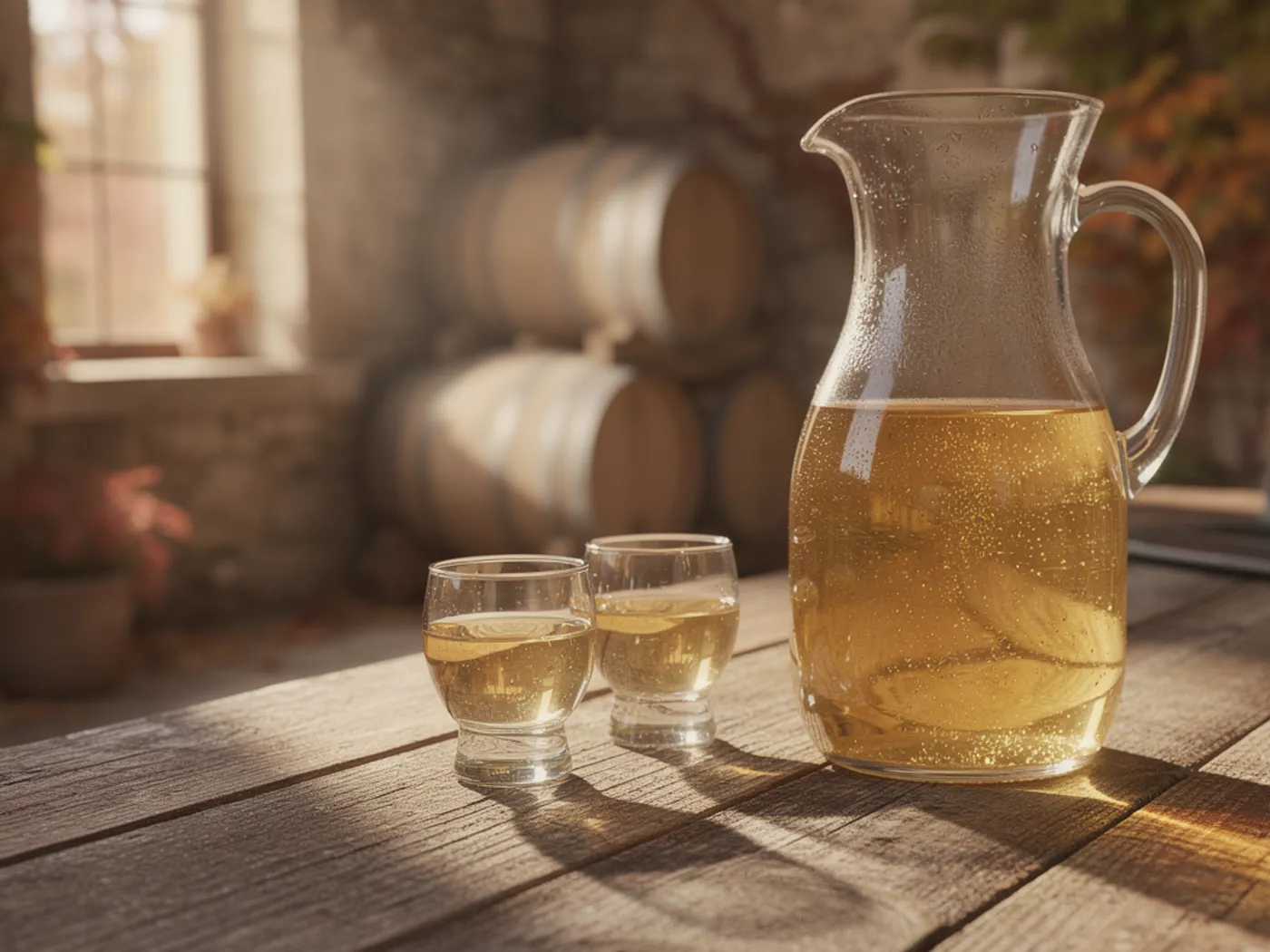
Burčák is partly fermented grape juice. It is pressed from fresh grapes and sold while the yeast is still working, which makes it cloudy, sweet, slightly fizzy and low in alcohol at first. The longer it sits, the drier and stronger it gets.
Only in season
Under Czech wine law, burčák may only be made from grapes grown in Czechia and can only be sold between 1 August and 30 November. Outside that window, anything sold as burčák is not the real thing. Most of it comes from the vineyards of South Moravia, with smaller amounts from the Mělník area and other parts of Bohemia.
How to buy and carry it
Burčák is usually sold from barrels into plastic or glass bottles with loose caps. That is deliberate: it keeps fermenting and releases gas, so a tightly sealed bottle can burst. Keep it upright, keep it cool and drink it within a day or two. Village harvest festivals, market stalls and wine bars are the best places to find it fresh.
What comes next
The season ends with St. Martin's wine, the first young wine of the year, which is traditionally opened on 11 November at 11:11. Restaurants often serve it with roast goose. Wines that carry the official St. Martin's label have passed a tasting before release.
Rules, prices and timetables change. We review this guide regularly; the date of the last check is shown at the top.
Storyline: Autumn in the Country
- Burčák and young wine: a short guide to the Czech wine seasonYou are here
- Prague Zoo's five cheetah cubs are now on view
- Drought trims the Czech grape harvest, but reds may benefit